

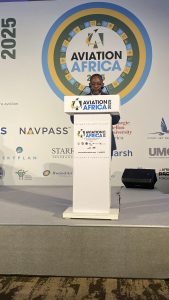
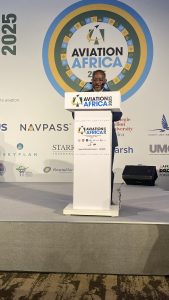
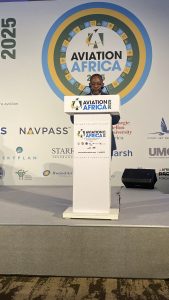
Summit – 04 Sept 2025
Across the continent, we are witnessing economies diversifying beyond oil and minerals into technology,
manufacturing, and services. Africa leads in fintech, with innovations like M-Pesa in Kenya inspiring the rest of the
world. Tech hubs in Lagos, Nairobi, Kigali, and Cape Town are driving a digital economy that is transforming the business landscape.
The African Continental Free Trade Area — AfCFTA —, along with the AU’s Agenda 2063, is bringing our economies
closer together than ever before. With more than 60% of its population under the age of 25, Africa’s youth are shaping governance, demanding accountability, and driving democratic reforms. While challenges remain, this young, dynamic population is our greatest asset for development.
Africa is the fastest-growing and most urbanising region in the world. African cities are not only economic hubs but also social and cultural centres with African music, cinema, literature, cuisine, and fashion increasingly resonating on the global stage.
At the same time, climate change is an undeniable reality. Droughts, floods, and desertification are impacting millions of Africans. Nonetheless, Africa is also investing in renewable energy, particularly solar power, showing the world that sustainability and economic growth can go hand in hand.
The African airline industry cannot remain unaffected by
these transformation dynamics
The Single African Air Transport Market now has 38 signatories. Although implementation varies, liberalisation
remains vital for reducing fares, improving connectivity, and boosting intra-African trade. Encouragingly, visa openness is also increasing, making African skies and borders more
accessible to African citizens.
The issue of blocked funds is easing. Airlines’ trapped revenues have fallen to $1.3 billion in April 2025, down from
$1.7 billion just six months earlier. This progress — especially in Nigeria — is enhancing airlines’ financial
capacity for investment and growth. Airlines facing blocked funds many times end up reducing flight frequencies or suspending routes to the impacted States. To facilitate aviation’s economic and social benefits, AFRAA is calling
upon governments to remove all barriers to airline revenue repatriation.
Call for more collaboration among airlines
African aviation remains resilient. Passenger traffic has increased by 15% year-on-year, with AFRAA projecting 113
million passengers in 2025. The passenger revenue trend indicates a strong recovery. African carriers now hold
over 52% of international capacity; however, in terms of intercontinental services, non-African carriers still dominate.
This emphasises the importance of our regional airlines continuing to expand, improve efficiency, and enhance global
competitiveness. Mr. Berthé highlighted that new long-haul routes from non-
traditional hubs — including Nigeria, Uganda, Côte d’Ivoire, and Angola — are reshaping the network map. AFRAA,
under the auspices of the AFRAA Route Network Coordination & Cargo Committee is actively advocating for
cooperation through joint ventures, partnerships, and consolidation. Alone, we are vulnerable, but together we are
strong.
Decarbonisation remains one of our greatest challenges. Africa lacks large-scale SAF production; financing and
regulatory frameworks are still weak; and infrastructure inefficiencies contribute to higher emissions. However, Africa also holds unique opportunities. With our abundant biomass resources and renewable energy potential, we can leapfrog into greener aviation if the right policies are implemented and
investments are made to achieve the NetZero 2050 roadmap.
Free Route Airspace acing towards reality in Africa
“The Free Routing trials with Ethiopian Airlines, Kenya Airways, Royal Air Maroc, and Air Arabia are paving the way
for Free Route Airspace in West and Central Africa by the end of 2025; a concrete step towards greater efficiency and
lower CO₂ emissions.” He stated. Our airlines need modern, fuel-efficient fleets to stay
competitive. We urge financial institutions and partners to expand access to affordable financing, enabling African
carriers to update their fleets and prepare for future demands. Safety remains a top priority. The AFRAA Safety and
Operations Summit in Kigali this year generated eight key recommendations, including runway safety and training.
Launch of African MRO event to foster collaboration, reduce costs
Meanwhile, Africa’s MRO market is growing, but a large part of our maintenance is still outsourced outside the continent. That is why we are proud to unveil the AFRICA MRO event that will be staged in 2026. The date and venue shall be announced in the coming days. This collaboration among our five major MROs (AT, MS, KQ, ET, SAA) will help reduce costs, improve efficiency, and enhance safety across the sector.
Aviation is not just part of this transformation; it is a driver of it. The dynamics of the new African landscape require
coordinated efforts and close collaboration among all stakeholders, including governments, regulatory authorities,
airlines, airports, air navigation service providers, suppliers, and customers.
In concluding, Mr. Berthé stated: “At AFRAA, we believe in the collaborative approach. Together, we can turn African
aviation into a lively logistics sector, supporting economic growth. Together, we can develop the aviation sector Africa
deserves.”