

Release date: 15 September 2026
Africa’s aviation industry continues to demonstrate strong performance, characterized by increased passenger traffic and improved operational efficiency. Key drivers of this positive trajectory include expanded routes, improved connectivity, and rising demand for domestic and international air travel.
In August 2026, seat capacity across Africa increased by 8.8% compared to August 2025. Intra-African routes also recorded a 10.5% increase in seat availability, driven by network growth, the introduction of new routes, and aircraft upsizing initiatives.
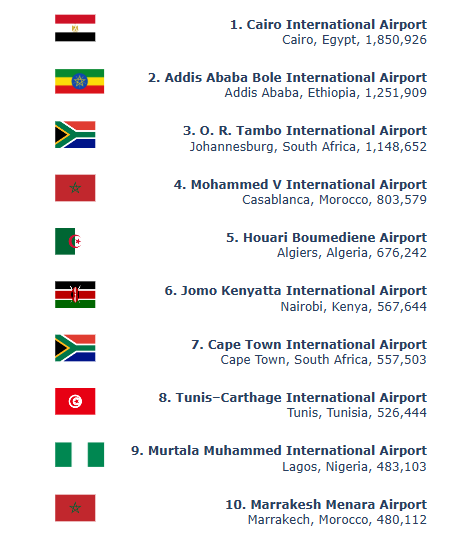
The top ten African airports by seat capacity for August 2026 were as follows:
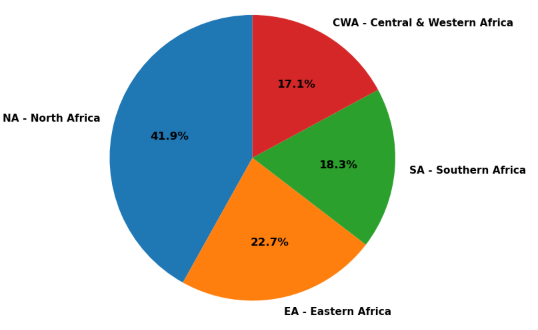
The regional distribution of seat capacity was as follows:
As of August 2026, African airlines accounted for 47.2% of international capacity, covering both regional and intercontinental operations, while non-African carriers accounted for 52.8%. For intercontinental services, African carriers held a 62.4% capacity share, compared with 37.6% for non-African operators.
In terms of international traffic, African carriers represented 51.1% of total traffic across regional and intercontinental operations in June 2026, while non-African carriers accounted for 48.9%. For intercontinental traffic specifically, African carriers held a 36.7% traffic share, compared with 63.3% for non-African airlines.
A year-on-year comparison of Available Seat Kilometers (ASKs) indicates a 9% increase in July 2026 compared to July 2025. Similarly, Revenue Passenger Kilometres (RPKs) increased by an estimated 5.8% over the same period.
As of August 2026, intra-African connectivity, based on capacity, comprised 39% for 3rd Freedom traffic rights, 38% for 4th Freedom traffic rights, and 23% for 5th Freedom traffic rights.
An analysis of cargo traffic by sub-region as of July 2026 indicates that African imports outpaced exports in most regions. Eastern Africa, however, recorded higher export volumes than imports. The market share of African airlines in cargo transport remains an important area of strategic focus. Overall, cargo traffic in Africa increased by 2.8% in July 2026 compared to July 2025.
Passenger revenues for African carriers also recorded growth, with July 2026 registering a 5.6% increase compared to June 2025.
An analysis of the global share of aircraft deliveries indicates that Africa accounted for 2%, while 67.4% of aircraft were in service.
Jet Fuel Prices: As of the week ending 21 Aug 2026, the global average jet fuel price stood at USD 163.87 per barrel, reflecting a 3.1% increase from the previous week. The weekly average jet fuel price for Africa during the same period was USD 169.01 per barrel.
Regulatory/Industry Affairs
African airlines are encouraged to remain attentive to ongoing regulatory and industry developments and take appropriate action as necessary. AFRAA continues to welcome updates from member airlines on relevant developments. Below is a concise summary that preserves the substance and key developments of the refined briefing.
ICAO Africa and Indian Ocean (AFI) Aviation Week Concludes with New Commitments (27-31 July 2026)
✈ Strategic priorities included: Implementation of the ICAO Strategic Plan for 2050, with Africa’s engagement central to connectivity, trade, tourism, integration and sustainable development; SAATM implementation, institutional capacity, sustainable financing and a coordinated African position ahead of the 7th Worldwide Air Transport Conference.
✈ New commitments arrived upon: The first AFI Donor Dialogue brought together 20+ partners, securing financial and in-kind support, technical cooperation, capacity-building, training, scholarships, expert deployments and institutional partnerships aligned with the AFI Plans.
✈ African ownership and leadership must remain central to implementation, with ICAO supporting States and partners in advancing Africa’s aviation priorities.
ICAO Convenes First Worldwide Air Transport Conference in Over a Decade (16-20 November 2026)
✈ Key priorities include: Strengthen governance and investment frameworks; develop bankable infrastructure based on robust business cases, needs assessments and cost-benefit analysis; modernize ICAO policies and operational tools, including the infrastructure project preparation toolkit; strengthen partnerships with financial institutions and investors; and accelerate capacity-building, skills development and targeted assistance under the No Country Left Behind goal, including Next Generation of Aviation Professionals (NGAP).
✈ Consensus on these priorities is critical to mobilizing the investment aviation needs to deliver sustainable economic prosperity for all.
Ghana Moves to Reduce Aviation Taxes to Comply with ECOWAS Reforms
✈ Ghana has inaugurated a national committee to implement the ECOWAS Supplementary Act on aviation charges on 20th August 2026, aiming to abolish four categories of taxes and reduce passenger service and security fees by 25%, following tensions over new levies, including an $18 security charge and a $100 infrastructure fee.
✈ AFRAA remains committed to working closely with ECOWAS to advance regional air transport development in West Africa and advocacy aimed at supporting the implementation of the Decision
West Africa Advances Harmonized Flight Inspection Standards
✈ West African Economic and Monetary Union (WAEMU/UEMOA) member states[1] and Mauritania met in Ouagadougou from 10–14 August 2026 to validate a shared Flight Inspectors’ Procedures Manual, in response to ICAO oversight audit findings and as part of wider efforts to strengthen the alignment of regional aviation safety oversight.
✈ Aviation safety oversight is the foundation of commercial air transport, covering areas ranging from airline licensing and pilot certification to aircraft maintenance approvals and operational audits. A harmonized inspection framework will provide airlines operating across multiple West African jurisdictions with a more predictable regulatory environment, reducing duplication and compliance costs while accelerating the launch of new routes and services.
South African Electronic Travel Authorization
✈ The South African Electronic Travel Authorization was officially launched by President Cyril Ramaphosa on 12 August 2026 as part of the Department of Home Affairs’ digital transformation programme to modernize the country’s visa and immigration system.
✈️ The AU’s Agenda 2063 stipulates the objective of enabling the people of Africa to move freely across borders to enhance trade and integration. The programme is therefore a welcome and positive development, aligned with the State implementation priorities that AFRAA advocates for, including visa openness and passenger facilitation, the removal of border friction that discourages travel, and the alignment of aviation facilitation measures with the AU Protocol on Free Movement of Persons.
Kenya Exemption on Aviation Spares/Parts
✈ KCAA endorsed IATA’s request for a blanket exemption from the proposed 16.5% VAT on aviation spares, parts, instruments, engines and aircraft components, and called on the Ministry of Roads and Transport to reverse its policy decision.
✈ The endorsement of the exemption is a welcome step towards reversing the policy decision, helping keep aircraft in the air through faster customs clearance, reduced costly downtime and a lower tax burden on imported aviation parts for airlines and maintenance centers. Such tax relief can strengthen the competitiveness of African airlines while supporting Africa’s efforts to position itself as an attractive regional maintenance hub.
[End]
About AFRAA
The African Airlines Association, also known by its acronym AFRAA, is the leading trade association of airlines from the member states of the African Union (AU). Founded in Accra, Ghana, in April 1968, and headquartered in Nairobi, Kenya, AFRAA’s mission is to promote, serve African Airlines and champion Africa’s aviation industry. The Association envisions a sustainable, interconnected and affordable Air Transport industry in Africa where African Airlines become key players and drivers to African economic development. AFRAA membership cuts across the entire continent, representing over 85% of total international traffic carried by African airlines. Follow us on Facebook, LinkedIn, Twitter and YouTube.
[1] Benin, Burkina Faso, Côte d’Ivoire, Guinea-Bissau, Mali, Niger, Senegal and Togo.